


When a child loses a baby tooth earlier than expected, many parents assume it is not a big concern. After all, baby teeth fall out anyway, right? While that sounds logical, early tooth loss can quietly create long term dental problems if it is not managed properly. This is where a space maintainer becomes extremely important.
A space maintainer may sound like a complicated dental device, but it serves one simple purpose. It protects your child’s future smile. If you are unsure whether your child needs one or why dentists recommend it, this guide will help you understand everything clearly.
What Is a Space Maintainer
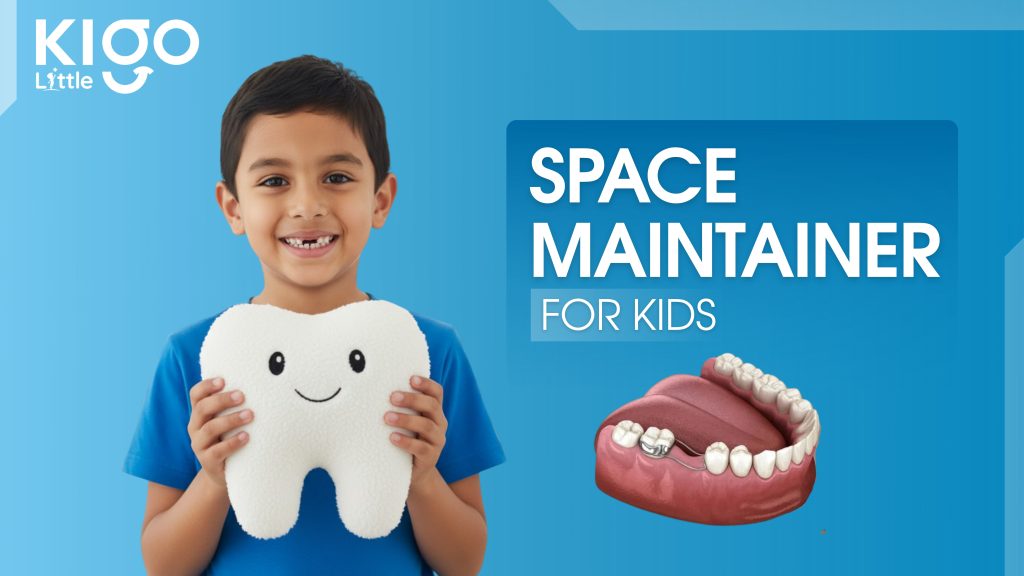
A space maintainer is a small dental appliance used to hold open the space left behind when a baby tooth is lost too early. It prevents nearby teeth from shifting into that empty space before the permanent tooth is ready to come in.
Baby teeth act as natural guides for permanent teeth. When one is lost too soon due to decay, injury or extraction, the surrounding teeth often move into that space. Once that happens, the permanent tooth may erupt in the wrong position or get trapped beneath the gums.
A space maintainer simply keeps that space open until the adult tooth is ready to erupt.
Why Baby Teeth Matter More Than You Think
Many parents underestimate the role of baby teeth. These teeth are essential for
- Proper chewing and digestion
- Clear speech development
- Balanced jaw growth
- Guiding permanent teeth into position
- Maintaining facial structure
When baby teeth are lost early, it can affect how the jaw develops and how adult teeth align. This often leads to crowding, crooked teeth or bite problems later.
When Does a Child Need a Space Maintainer
Not every missing baby tooth requires a space maintainer. Your pediatric dentist decides based on several factors.
A space maintainer may be needed if
- A baby tooth is lost much earlier than expected
- Multiple teeth are missing
- The permanent tooth will take time to erupt
- There is not enough space in the jaw
- The tooth was removed due to severe decay
- The child has a habit that affects alignment
Your dentist will usually take an X ray to see how close the permanent tooth is to erupting before recommending treatment.
Common Causes of Early Tooth Loss
Understanding why baby teeth are lost early helps parents prevent future issues.
Tooth Decay
Severe cavities are the most common cause. If left untreated, decay can damage the tooth so badly that extraction becomes necessary.
Dental Trauma
Falls, sports injuries or accidents can cause baby teeth to break or get knocked out prematurely.
Infections
Untreated dental infections may require removal of the tooth to protect the surrounding area.
Medical Conditions
Some children with specific medical or developmental conditions may lose teeth earlier.
Types of Space Maintainers
There are different types of space maintainers depending on how many teeth are missing and where they are located.
Fixed Space Maintainers
These are cemented to the teeth and cannot be removed by the child. They are commonly used because they are reliable and low maintenance.
Examples include
- Band and loop space maintainer
- Lingual holding arch
Removable Space Maintainers
These look similar to retainers and can be taken out for cleaning. They are usually recommended for older children who can follow instructions well.
Your dentist will choose the type that best suits your child’s age, dental condition and cooperation level.
How a Space Maintainer Is Placed
The process is simple and child friendly.
First, the dentist examines your child’s mouth and may take X rays. Then impressions are taken to design a custom fit appliance. Once ready, the space maintainer is gently placed and adjusted for comfort.
The procedure is painless and usually completed in one or two visits.
Does Wearing a Space Maintainer Hurt
No. Space maintainers are designed to be comfortable. Some children may feel a slight pressure or awareness for a few days, but they adapt quickly.
There should be no pain. If your child feels discomfort, it is important to inform the dentist so adjustments can be made.
How Long Does a Child Need a Space Maintainer
The appliance stays in place until the permanent tooth begins to erupt. This could be a few months or a couple of years depending on the child’s age and tooth development.
Regular dental check ups are important so the dentist can monitor progress and remove the space maintainer at the right time.
Caring for a Space Maintainer
Good care ensures the appliance works effectively.
Parents should
- Help the child brush carefully around the appliance
- Avoid sticky foods like chewing gum and toffees
- Encourage rinsing after meals
- Attend regular dental visits
Maintaining good oral hygiene prevents plaque buildup and gum irritation.
What Happens If You Skip a Space Maintainer
Ignoring early tooth loss can lead to long term problems such as
- Crowded teeth
- Crooked permanent teeth
- Bite issues
- Need for braces later
- Speech problems
- Jaw misalignment
A simple space maintainer can prevent complex orthodontic treatment in the future.
Benefits of Space Maintainers
Space maintainers offer many advantages for your child’s oral health.
They
- Preserve space for permanent teeth
- Reduce the need for braces later
- Support healthy jaw development
- Prevent teeth from shifting
- Protect your child’s natural smile
It is a small step that can make a big difference.
A space maintainer may seem like a small dental appliance, but its impact on your child’s future smile is significant. Early tooth loss without proper care can lead to alignment problems that last a lifetime. By acting early and following your pediatric dentist’s advice, you can protect your child’s developing teeth and avoid complex treatments later.
If your child has lost a baby tooth earlier than expected, do not wait. A timely evaluation can save years of dental trouble and keep their smile healthy, confident and well aligned.
At Kigo Little, we understand that even small dental concerns can feel big when it comes to your child. Our pediatric dental team focuses on gentle care, early guidance and happy experiences that protect growing smiles. Call us at 8333999987 to book your child’s visit and give their future smile the right support today.
FAQs
Q: Is a space maintainer really necessary
A: If a baby tooth is lost early and the permanent tooth is not ready to erupt, a space maintainer is highly recommended.
Q: Can my child eat normally with a space maintainer
A: Yes. Children can eat most foods, but sticky and hard foods should be avoided.
Q: Will my child need braces even after using a space maintainer
A: Space maintainers reduce the risk of braces but do not guarantee they will never be needed.
Q: How often should my child visit the dentist with a space maintainer
A: Regular check ups every six months or as advised by the dentist.
Q: Can the space maintainer fall out
A: Fixed maintainers are secure, but if it loosens, visit the dentist immediately.
