


Every child goes through habits that comfort them—whether it’s cuddling a blanket, using a pacifier, or sucking their thumb. Thumb sucking, in particular, is one of the most common habits in toddlers and young children. It’s a natural reflex that helps babies feel secure and soothed, especially during sleep or when they’re anxious.
But what happens when thumb sucking continues beyond the toddler years? Most parents wonder, “Is this harmless, or should I be worried?”
At Kigo Little – Kids & Teen Dentistry in Hyderabad, we help parents understand when thumb sucking becomes a problem and how it can affect your child’s oral health in the long run.
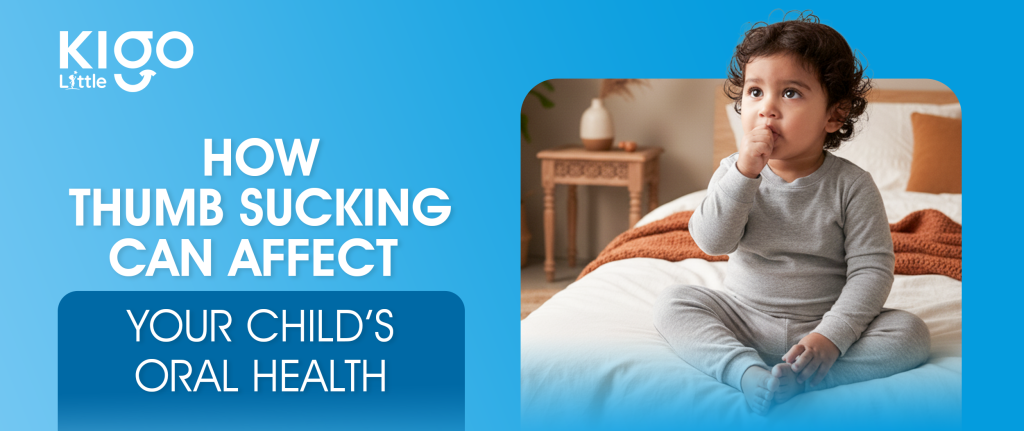
Why Do Children Suck Their Thumbs?
Thumb sucking is completely normal in infants and toddlers. It’s often a source of comfort or a way to self-soothe when they’re tired, hungry, or stressed.
Most children naturally stop the habit between ages 2 and 4, but if it continues past the eruption of permanent teeth (around age 6), it can start causing dental and facial development issues.
When Does Thumb Sucking Become a Problem?
The duration, frequency, and intensity of thumb sucking determine whether it’s harmful.
- Gentle, occasional thumb sucking may not cause any noticeable damage.
- Forceful, frequent sucking—especially during sleep—can lead to dental misalignment and bite problems.
Pediatric dentists recommend intervening around age 4 or 5 if the habit shows no signs of stopping naturally.
How Thumb Sucking Affects Your Child’s Oral Health
Prolonged thumb sucking can impact both the teeth and the jaw, leading to a range of oral health concerns.
- Misaligned Teeth (Malocclusion)
Constant pressure from the thumb can push the upper front teeth outward and lower teeth inward. This often causes:
- Open bite: When front teeth don’t meet when the mouth is closed.
- Overjet (protruding teeth): Front teeth slant outward, affecting bite and appearance.
- Changes in Jaw and Palate Shape
Persistent thumb sucking can influence jaw growth and the shape of the roof of the mouth (palate). The palate may become narrower and higher, which can later cause:
- Crowded or overlapping teeth
- Difficulty with proper tongue placement
- Speech challenges
- Speech Difficulties
Children who continue thumb sucking past early childhood may develop speech issues, such as:
- Lisping
- Difficulty pronouncing “s” and “th” sounds
- Tongue thrusting during speech
This happens because the thumb alters the natural position of the tongue in the mouth.
- Bite Problems and Chewing Issues
When the upper and lower jaws are not aligned properly, your child may have trouble biting or chewing food effectively. Over time, this can cause jaw discomfort and improper wear of teeth.
- Skin and Nail Problems
Thumb sucking doesn’t only affect the teeth. It can also cause:
- Chapped or cracked skin around the thumb
- Calluses or infections from constant moisture
- Distorted nail growth
- Social and Emotional Impact
Older children who still suck their thumbs may feel self-conscious, especially around peers. This can lead to teasing and emotional stress, making the habit even harder to break.
How to Help Your Child Stop Thumb Sucking
Breaking the thumb sucking habit requires patience, understanding, and sometimes professional guidance. Here are some practical ways to help your child stop:
- Positive Reinforcement
Instead of punishing your child, use praise or small rewards when they avoid thumb sucking. Create a progress chart to track success.
- Identify Triggers
Notice when your child tends to suck their thumb—before bed, when anxious, or while watching TV. Once you identify triggers, you can offer comfort alternatives like:
- Cuddling a toy
- Holding a soft blanket
- Reading a bedtime story
- Use Gentle Reminders
Remind your child gently when you notice thumb sucking. Avoid scolding, as it can increase anxiety and worsen the habit.
- Introduce a Replacement Activity
Engage your child in activities that keep their hands busy, such as drawing, puzzles, or playdough.
- Use Dental Appliances (if needed)
If the habit persists beyond age 6, your pediatric dentist may suggest a habit-breaking appliance, such as a thumb guard or a fixed device placed inside the mouth. These gently discourage thumb sucking without causing pain.
- Seek Professional Support
At Kigo Little, our pediatric dentists use a compassionate, child-centered approach to help children overcome thumb sucking. We combine counseling, behavior modification techniques, and dental care to protect your child’s oral development.
Can Thumb Sucking Damage Be Reversed?
Yes — if caught early, most dental and jaw issues caused by thumb sucking can be corrected easily. Early intervention allows the teeth and jaws to naturally shift back to their correct positions.
However, if the habit continues into the late childhood years, orthodontic treatment such as braces or aligners may be needed to fix alignment problems.
When Should You Visit a Pediatric Dentist?
Schedule a visit if you notice:
- Front teeth slanting outward
- Difficulty biting or chewing
- Speech issues
- Thumb sucking beyond age 5–6
A pediatric dentist will examine your child’s bite, evaluate jaw growth, and suggest gentle solutions to break the habit and prevent further damage.
Preventive Dental Care Tips for Parents
- Start dental visits by your child’s first birthday.
- Encourage twice-daily brushing with a soft-bristle brush and fluoride toothpaste.
- Schedule dental check-ups every six months.
- Offer a balanced diet with limited sugary snacks.
- Reinforce good oral habits positively, not through fear.
Thumb sucking is a normal part of early childhood, but when it persists beyond a certain age, it can affect your child’s teeth, bite, and speech development. The good news? With the right approach and professional support, it’s a habit that can be gently and successfully overcome.
At Kigo Little – Kids & Teen Dentistry, we believe every child’s smile deserves gentle protection and care. Our friendly team works with parents to guide little ones toward healthy habits that last a lifetime. Call us today at 📞 +91 8333999987 to schedule a fun, stress-free consultation and help your child’s smile grow bright, strong, and confident.
FAQs
Q: When should I be concerned about my child’s thumb sucking?
A: If your child continues thumb sucking beyond age 4 or 5, it’s time to consult a pediatric dentist to prevent dental or jaw problems.
Q: Can thumb sucking cause permanent damage?
A: Prolonged, forceful thumb sucking can cause open bites or crooked teeth, but early intervention can prevent permanent damage.
Q: How long does it take for a child to stop thumb sucking?
A: With gentle reinforcement and consistent support, most children can break the habit within a few weeks to a few months.
Q: Do thumb guards really help?
A: Yes, habit-breaking appliances or guards work effectively when combined with positive behavioral strategies.
Q: Can pacifiers cause the same damage as thumb sucking?
A: Yes, prolonged pacifier use can also affect tooth and jaw alignment if continued beyond age 3–4.
Q: Is it okay if my child only sucks their thumb while sleeping?
A: Occasional thumb sucking during sleep is common, but if it continues regularly after age 5, it’s best to consult a dentist.
Q: How do dentists treat open bites caused by thumb sucking?
A: Early cases can be corrected naturally once the habit stops. In older children, orthodontic treatment like braces or clear aligners may be needed.
