


Every parent knows the struggle — your child suddenly complains of a toothache, and the pain just won’t go away. You take them to the dentist, expecting a small cavity filling, but then you hear the words “Your child may need a pulpotomy.”
If that sounds unfamiliar or even a little scary, don’t worry. A pulpotomy is one of the most common and safe pediatric dental procedures used to save baby teeth affected by deep decay or infection. At Kigo Little – Kids & Teens Dentistry, we perform pulpotomies gently and painlessly, helping children keep their natural teeth healthy and strong.
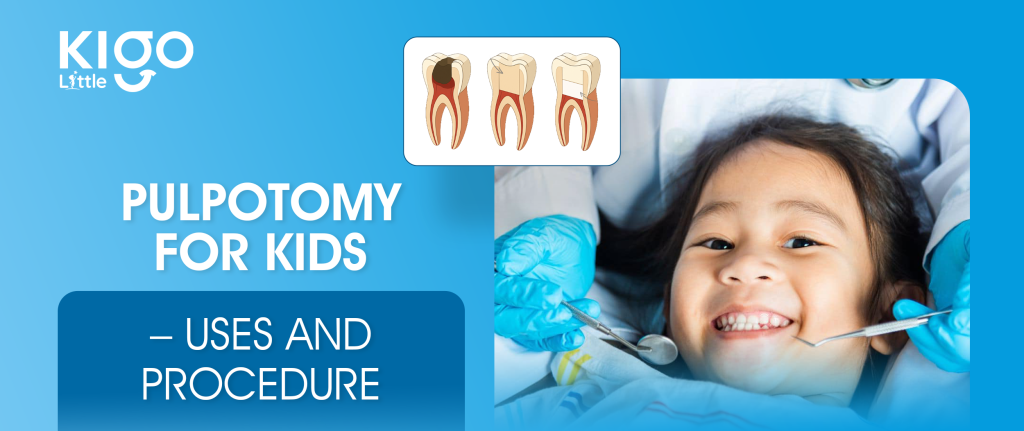
This guide explains everything parents need to know — what a pulpotomy is, when it’s needed, how it’s done, and why it’s important for your child’s smile.
What is a Pulpotomy?
A pulpotomy is often called a “baby tooth root treatment.” It’s a simple, child-friendly dental procedure used when decay reaches the pulp (the soft, nerve-containing part) of a tooth but hasn’t damaged the entire root.
Think of it as a partial root canal for kids — instead of removing the entire pulp like in adult root canals, the dentist removes only the infected portion in the crown of the tooth while keeping the healthy root pulp intact.
The result?
Your child’s tooth stays in place, functions normally, and continues to support proper chewing and jaw development until it naturally falls out.
Why Do Kids Need a Pulpotomy?
Children’s teeth, especially baby molars, are more prone to decay because of thinner enamel, sugary diets, and sometimes incomplete brushing.
A pulpotomy is recommended when:
- A deep cavity has reached the pulp (inner nerve).
- The child has pain, sensitivity, or swelling near the affected tooth.
- The tooth is vital (alive) and can still be saved.
- The infection hasn’t spread to the root or surrounding bone.
The goal is to remove the infected tissue, protect the healthy pulp, and prevent extraction of the tooth.
Signs Your Child May Need a Pulpotomy
You should schedule a dental check-up if your child experiences:
- Persistent toothache or night pain.
- Swelling or redness around a tooth.
- Sensitivity to hot or cold foods.
- A dark spot or cavity on the tooth.
- Pain while chewing.
In most cases, early intervention can save the tooth with a pulpotomy before the infection spreads further.
Benefits of a Pulpotomy for Kids
- Preserves natural baby teeth until permanent ones erupt.
- Prevents early tooth loss that can lead to spacing or speech issues.
- Stops infection and eliminates pain.
- Supports jaw growth and alignment.
- Minimally invasive with quick recovery.
At Kigo Little, our gentle pediatric specialists use child-friendly techniques to make the process easy, quick, and fear-free.
Step-by-Step: The Pulpotomy Procedure
Here’s what happens during a typical pulpotomy procedure at our clinic:
1. Examination & X-rays
The dentist begins with a thorough examination and digital X-rays to determine how far the decay has reached. This helps confirm if a pulpotomy (and not a full pulpectomy or extraction) is needed.
2. Local Anesthesia
A gentle local anesthetic is given to numb the area. We often use topical gels and distraction techniques to ensure your child feels no discomfort.
3. Tooth Isolation
The tooth is isolated using a small rubber sheet (dental dam) to keep it dry and free from saliva.
4. Removal of Decay and Pulp Chamber Cleaning
The dentist removes all the decay and opens the pulp chamber to clean out the infected portion of the pulp tissue. The root pulp, which remains healthy, is left untouched.
5. Medication Placement
A biocompatible medicated paste (such as formocresol, MTA, or ferric sulfate) is placed over the remaining pulp to soothe and disinfect it.
6. Sealing and Restoration
The chamber is then sealed with a base filling, and a stainless-steel crown or tooth-colored crown is placed on top to protect the tooth and restore full function.
The entire process usually takes 30–45 minutes and can often be completed in a single visit.
What Happens After the Procedure?
Your child might experience mild tenderness for a day or two, which can be managed easily with over-the-counter pain relief prescribed by your dentist.
Here’s how to care for the treated tooth:
- Avoid sticky or hard foods for 24 hours.
- Maintain regular brushing with gentle strokes.
- Encourage rinsing after every meal.
- Follow up as recommended for crown fitting or review.
Most children resume normal eating and activity right after the appointment.
Pulpotomy vs Pulpectomy – What’s the Difference?
Parents often confuse these two procedures, but they’re quite different.
| Feature | Pulpotomy | Pulpectomy |
| Purpose | Removes infected pulp in the crown only | Removes all pulp tissue (crown + root) |
| When Used | When the root pulp is still healthy | When the entire pulp is infected |
| Tooth Type | Usually for baby teeth | For both baby and permanent teeth |
| Duration | 30–45 minutes | 60–90 minutes |
| Restoration | Crown placed after sealing | Root canal filling and crown placement |
A pulpotomy is less invasive and preferred whenever the infection is limited, as it preserves the vitality of the tooth.
Is a Pulpotomy Painful?
Not at all. With modern anesthesia and pediatric care techniques, pulpotomies are painless and comfortable. Most children don’t even realize they’re undergoing treatment once the area is numb.
Our pediatric team ensures your child feels relaxed with friendly communication, comforting explanations, and a calm environment throughout the procedure.
Preventing the Need for a Pulpotomy
The best way to avoid extensive dental treatments is through early prevention. Here are a few ways to protect your child’s teeth:
- Brush twice a day using fluoride toothpaste.
- Floss gently between teeth once daily.
- Avoid sugary snacks and drinks between meals.
- Schedule dental checkups every six months.
- Ask your dentist about fluoride treatments and sealants for added protection.
Why Choose Kigo Little for Your Child’s Pulpotomy?
- Pediatric Specialists: Our dentists are trained exclusively in child dental care.
- Gentle Approach: Every step is explained to make your child feel safe and calm.
- Pain-Free Procedures: Child-safe anesthesia and distraction techniques.
- Kid-Friendly Environment: Bright, welcoming, and fun spaces for little patients.
- Focus on Prevention: Education-based care for long-term dental health.
We believe every child deserves a healthy, happy smile — without fear or discomfort.
A pulpotomy might sound complicated, but it’s one of the most effective ways to save your child’s natural tooth and prevent bigger dental problems in the future. With modern materials, gentle techniques, and the right pediatric specialist, your child’s experience will be smooth, quick, and comfortable.
At Kigo Little, we make dental visits stress-free — for both kids and parents.
At Kigo Little, we treat little smiles with big care. Our gentle pulpotomy procedures help protect your child’s teeth, relieve pain, and build lifelong dental confidence. Call us today at 📞 +91 8333999987 to schedule a check-up — because a happy, healthy smile starts early.
FAQs
Q: Is a pulpotomy the same as a root canal?
A: It’s similar but not the same. A pulpotomy removes only the infected part of the pulp, while a root canal (or pulpectomy) removes all the pulp tissue.
Q: Can baby teeth be saved with a pulpotomy?
A: Yes. The goal of a pulpotomy is to preserve baby teeth until they naturally fall out, maintaining proper spacing for permanent teeth.
Q: How long does a pulpotomy last?
A: With good oral hygiene, a pulpotomy-treated tooth can last until it’s naturally replaced by the permanent tooth.
Q: Is a crown necessary after pulpotomy?
A: Yes. A crown protects the tooth from further decay or damage and restores chewing function.
Q: Can my child eat after the procedure?
A: Yes, but soft foods are recommended for the first 24 hours to avoid pressure on the treated tooth.
Q: What happens if the infection is too deep?
A: If the infection extends into the roots, your dentist may recommend a pulpectomy or extraction.
Q: Is it safe for children?
A: Completely. Pulpotomies are performed routinely by pediatric dentists and are safe, effective, and pain-free.
