


Every parent wants to protect their child’s smile from painful cavities. Even with good brushing and flossing habits, it’s hard to clean every tiny groove in those back molars. That’s where dental sealants come in—a simple, safe, and effective way to keep your child’s teeth cavity-free for years.
But many parents wonder, Are dental sealants really safe for kids? Let’s explore how they work, why they’re important, and what you need to know before your child gets them.
What Are Dental Sealants?
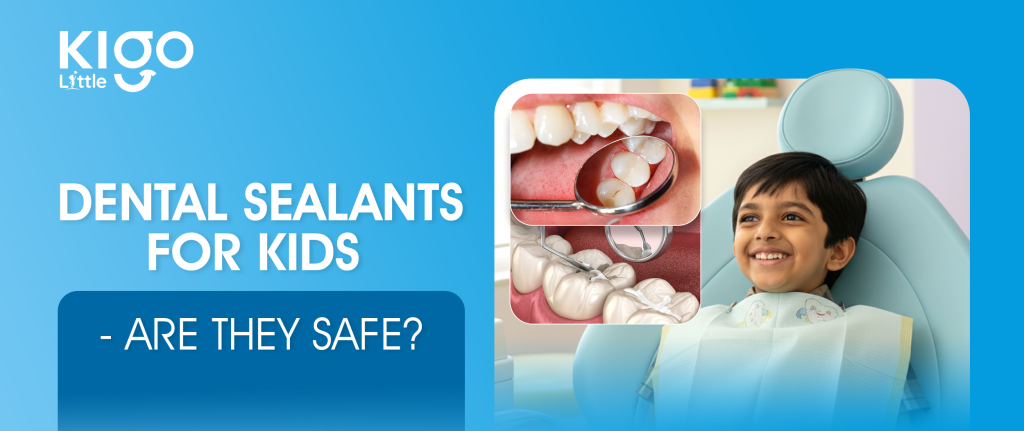
Dental sealants are thin, protective coatings applied to the chewing surfaces of the back teeth (molars and premolars). These teeth have deep grooves where food particles and bacteria can hide, making them more prone to cavities—even with regular brushing.
Sealants act like a shield, preventing bacteria and acids from reaching the enamel. Think of them as raincoats for your child’s teeth, keeping out decay-causing agents.
How Do Sealants Work?
The process is quick, painless, and non-invasive. Here’s what happens during a typical sealant appointment at Kigo Little:
- Cleaning: The dentist cleans and dries your child’s teeth.
- Etching: A mild gel is applied to roughen the tooth surface slightly, helping the sealant stick better.
- Application: The liquid sealant is carefully brushed onto the grooves of the teeth.
- Curing: A special blue light hardens the coating within seconds.
Your child can eat and drink normally right after the procedure. The entire process usually takes 15–30 minutes.
Why Are Sealants Important for Kids?
Children’s back teeth are especially vulnerable to decay because:
- Their enamel is thinner than adults’.
- Brushing techniques are often less effective.
- Molars have deep grooves that trap food easily.
Sealants reduce the risk of cavities by up to 80%, making them one of the best preventive treatments in pediatric dentistry.
Are Dental Sealants Safe for Kids?
Yes, dental sealants are completely safe for children when applied by a qualified dentist. Sealants have been used for decades and are recommended by the American Dental Association (ADA) and the Centers for Disease Control and Prevention (CDC).
There has been some concern about a compound called bisphenol-A (BPA) in certain sealant materials, but studies show the amount—if present at all—is extremely small and well below harmful levels.
At Kigo Little, we use BPA-free sealants, ensuring your child’s treatment is both safe and effective.
When Should Kids Get Dental Sealants?
Most children benefit from sealants when their first permanent molars come in, around age 6, and again when their second molars erupt, around age 12.
Dentists may also recommend sealants for baby teeth with deep grooves if your child is prone to cavities.
How Long Do Sealants Last?
Sealants can last 5 to 10 years, but they should be checked regularly during dental visits. If a sealant wears down or chips, it can easily be repaired or replaced.
Benefits of Dental Sealants for Kids
- Cavity Prevention: Protects vulnerable teeth from decay.
- Quick & Painless: No drilling, no anesthesia, and no discomfort.
- Cost-Effective: Prevents the need for expensive fillings or root canals.
- Improves Oral Health: Keeps baby and permanent teeth healthy for years.
- Peace of Mind for Parents: One simple treatment offers long-term protection.
What Happens If You Skip Sealants?
Without sealants, those deep grooves on the back teeth remain exposed to bacteria and acids. Even with good brushing habits, food particles often stay trapped, leading to decay. Once cavities start, your child may need:
- Fillings
- Pulp treatment (baby root canal)
- Crowns or extractions
Sealants help avoid these complications altogether.
Aftercare Tips
After sealant application:
- Avoid sticky or hard foods (like toffees) for 24 hours.
- Maintain regular brushing and flossing.
- Visit the dentist every 6 months to check sealant condition.
Sealants don’t replace brushing—they just give extra protection.
Dental sealants are one of the safest and most effective preventive treatments for children. They protect hard-to-reach areas from decay, reduce cavity risk, and keep smiles strong for years. When combined with regular checkups, brushing, and fluoride, they make a powerful defense against tooth decay.
At Kigo Little, we believe prevention is the first step to a lifetime of healthy smiles. Our gentle, child-friendly team makes every dental visit fun, while our BPA-free sealants offer parents peace of mind. Call us today at 📞 +91 8333999987 and let’s protect your little one’s smile—one tooth at a time.
FAQs
Q: Do dental sealants hurt?
A: Not at all. The procedure is quick, easy, and completely pain-free.
Q: Are sealants visible?
A: Most sealants are clear or white, blending with natural teeth.
Q: Can my child eat after getting sealants?
A: Yes, your child can eat immediately after, though it’s best to avoid sticky foods for a few hours.
Q: How often do sealants need to be reapplied?
A: Sealants typically last several years but should be checked during every dental visit.
Q: Are sealants only for permanent teeth?
A: Mostly yes, but baby teeth with deep grooves can benefit from them too.
Q: Do sealants replace fluoride treatments?
A: No. Sealants and fluoride work together—fluoride strengthens enamel, while sealants block bacteria.
Q: What if a sealant falls off?
A: Your dentist can easily reapply it. There’s no discomfort or complex procedure needed.
